
Does legislative immunity mean CO legislators who cut people’s testimony off face no personal consequence? In defending its assault weapons ban, Superior, CO is twisting the law til it screams.

Does legislative immunity mean CO legislators who cut people’s testimony off face no personal consequence?
The Colorado Politics article below details a recent Federal appeals court hearing to determine what limits a legislator could place on a citizen’s speech without facing consequences.
The case at hand stems from a couple of hearings back in the regular 2024 legislative session. The plaintiffs in the suit allege that lawmakers who cut off the mics of those trying to testify on bills relating to gender issues were illegally censoring them.**
Quoting the article: “The plaintiffs have argued that Democratic committee chairs inappropriately cut them off while they were testifying because the witnesses refused to refer to certain people by the names and pronouns that corresponded with their gender identity.”
You might be tempted to say, well, yes it does. Whether you agree with what bills were about or not, whether you agree about whether or not you should use someone’s preferred pronouns, they have the right to express their opinion on the bills and use whatever pronouns they like. Thus, a lawmaker cutting someone off is violating their rights to free speech.
You might be tempted to think that, but you don’t think like a judge if you do.
You see, there are matters relating to the pretty wording of law. Quoting again to flesh out the original trial court ruling, “Last November, U.S. District Court Judge Regina M. Rodriguez dismissed the lawsuit against Weissman, Gonzales and other lawmakers. She noted that neither the 10th Circuit nor the U.S. Supreme Court had addressed whether lawmakers are entitled to legislative immunity for their enforcement of decorum rules during public testimony. ‘Under the circumstances of this case, the Court finds that Defendants’ alleged acts were related to Defendants’ legislative function of overseeing public testimony on pending legislation and gathering relevant information and input from the public. These are “integral steps in the legislative process,”’ wrote Rodriguez, a Joe Biden appointee.”
Legislative immunity is a legal doctrine that protects legislators from personal liability for actions or decisions made during official legislative business. The theory behind it being that you don’t want a legislator having to do their work factoring in concerns about personal liability for their legislative actions.
The plaintiffs appealed the ruling arguing (what to me is the common sense interpretation) that a government official cutting you off from speaking your piece has violated your First Amendment rights.
There’s a lot more legal back and forth along with the sorts of hypothetical questions appellate (and higher) judges are known for. I will leave to you to read if you want. I’ll be honest, I don’t understand how this could even be a question. I fail to see how a violation of someone’s First Amendment rights could need any such legal sophistry.
Legislative immunity wouldn’t protect a legislator from liability if they hit someone with their car parking at the capitol, no? What I mean by that is that there are some actions bad enough that they shouldn’t be clothed in legislative immunity. Cutting the mic of a citizen because you disagree, depriving them of their rights to speak their minds to their government is one of them. It’s bad enough that there shouldn’t be any need to parse out legal estoerica.
This is one case where legislators should have a little bit of fear, fear that includes some personal civil liability attached to it. If not, what’s to prevent a legislator from feeling free to trample your rights in this or other ways as long as it happens during the legislative session? They need some fear to help them remember.
I hope the appellate judges have enough sense to rule according to obvious common sense. If I hear an update, I’ll share.
**For more context around the suit and hearings, check out the second link below.
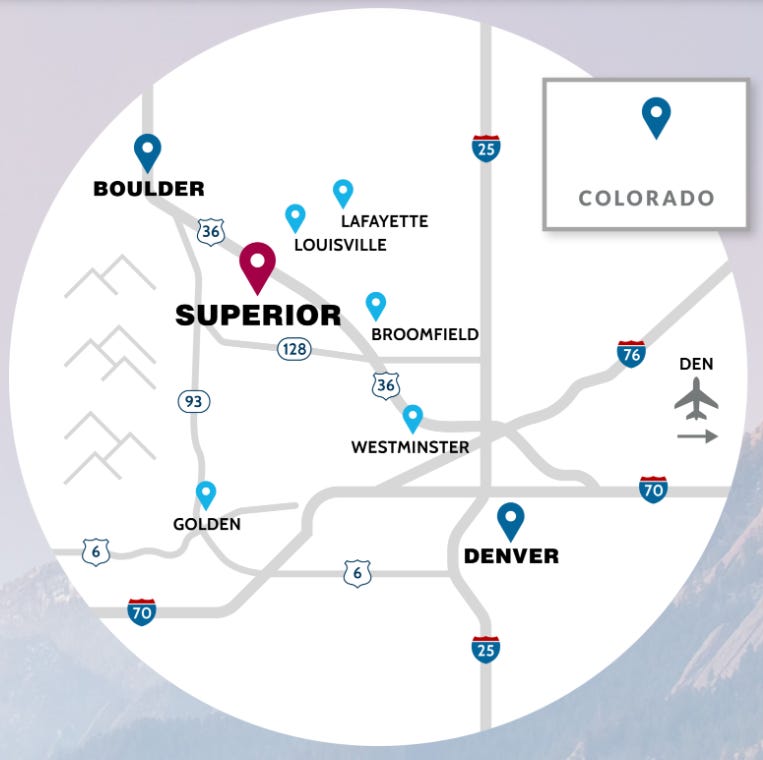
In defending its assault weapons ban, Superior, CO is twisting the law til it screams.
I have shared videos by Washington Gun Law before; they are a great resource for gun control law, bouncing back and forth between national gun cases and local laws.
This now, sadly, includes Colorado where over the past 4 years our state’s ruling Democrats have put us in the same gun control category as California (see “Related” below), Washington, and Oregon. They’ve made us frequent cautionary tales on channels like Washington Gun Law’s.
The video linked first below is another from Washington, focusing on Superior, CO’s arguments defending its assault weapons ban in Federal court.
I thought that sharing it with you would not only be a good update on that case, but it would also shed some light on an argument which I have seen a lot of in other Washington Gun Law videos (and which seems to be a common one made in defense of gun bans).**
Skipping lots of detail, more in the Harvard Journal article linked second link below if you’d like it, the US Supreme Court in its Heller Decision gave clear guidance on what arms are protected by the Second Amendment.
As you might imagine, the classification of weapons into those protected by the Second Amendment vs. those that aren’t (in the extreme case think a 22 pistol vs. a rocket launcher) is an important one: one strategy for would-be gun banners is to simply put some kinds of guns into the category not protected by the Constitution. No matter how mundane or exotic the gun, putting it in the category “outside the Second Amendment” clears the way for banning it.
The Harvard article puts it succinctly: “Heller determined that bearable arms that are ‘in common use’ today are constitutionally protected and cannot be banned.” The details in this sentence (and in the ruling are critical for what we will talk about, so I want you to make special note what is in the phrase and what isn’t.
It’s only “in common use today” (with the additional caveat of needing to be for lawful purposes) as the test. It is not, as you will see gun control advocates and governments defending gun bans try to claim, “in common use for self defense”. It’s not “in common use at the founding”.
Adding that extra language, language not in the US Supreme Court’s ruling, allows for a neat little bit of legal dancing. The logic goes like this:
--Guns like AR 15’s might be popular, but they are not in common use for self defense. This latter claim is often bolstered by comparing the number of times an AR 15 is used in self defense vs. something like a pistol.
--Since the gun is not in common use for self defense, by Heller’s test it is not a protected arm under the Second Amendment.
--Since those types of guns are not protected under the Second Amendment, the government can freely regulate or even ban them, just like they’d ban you from owning a rocket launcher.
The problem is that this is NOT the test the US Supreme Court has called for. If we go back to the first step above and revisit, you can see how the whole house of cards falls as we pluck out a card from the bottom layer.
AR 15’s are in common use. Perhaps not for self defense but for a whole array of other lawful and ordinary purposes. Hunting and target practice being examples. This puts it squarely in the category of lawful guns.
Gun control advocates and many lower courts (as well as a few appellate courts if memory serves) have swallowed the “in common use for self defense” argument lately, and it’s clear that Superior is banking on our district’s Federal courts doing the same.
What many who object to this are hoping for is that the US Supreme Court, as the highest court in the land and the one supposedly calling the shots in the judicial system, will rein in and force lower courts to follow their precedent.
I guess we will see how this shakes out for both Superior, CO and the nation as a whole.
I want to close with one last thing. I used AR 15’s as an example above, but the same logic, on both sides, applies to things like “high capacity magazines”. Gun control advocates are hoping that they can defend their policy with the same kind of thinking for those as with AR 15’s. This is another one that we’ll have to wait to see how it plays out.
**There is more involved with what Superior is trying to do in court, including another legal strategy involving a different US Supreme Court ruling, so watching the video will give you the full story and is highly recommended.
Related:
Get ready for background checks for barrels in Colorado?
The video from Washington Gun Law linked at bottom is about new CA gun control measures, but if you’ve been watching and have lived in CO long enough, you know they’ll wash up here.
Skipping lots of detail, there are only certain parts of a gun that are legally classified as the gun (and thus needing a background check, etc., to buy). A gun barrel, just the tube, is not one of them.
As the law is right now, you can buy a new barrel to put on your receiver without needing all the legal/procedural wrangling above.
CA recently passed a law to change this. When this law takes effect, buying a new barrel for your gun will require the same steps as buying a whole gun or a receiver.
Bet you my lunch we’ll see this here soon.